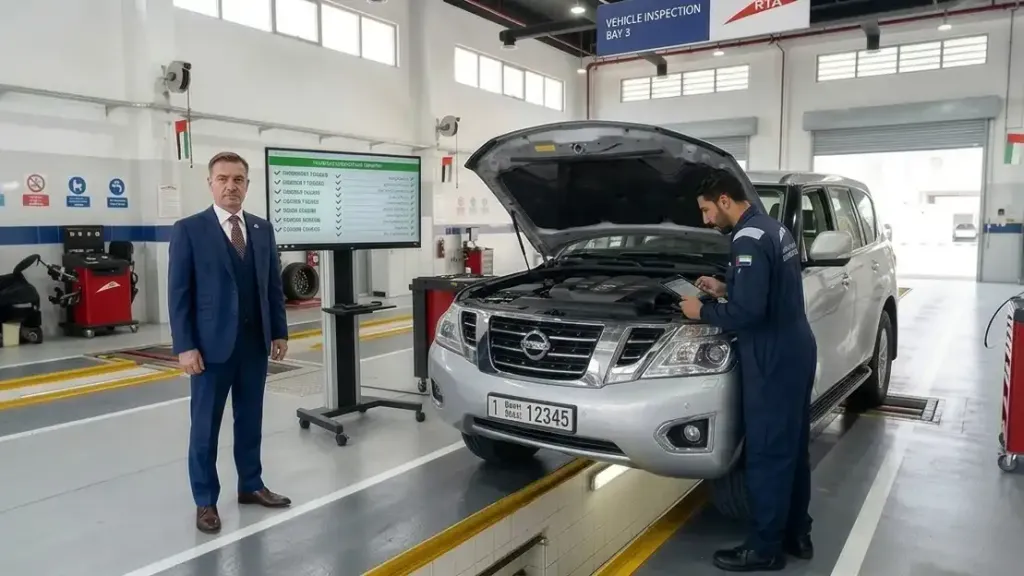
If your vehicle registration (Mulkiya) is due for renewal in Dubai, passing RTA vehicle testing is one of the most important steps. Many vehicle owners fail their test due to minor issues that could have been fixed beforehand. Understanding exactly what inspectors check can save you time, money, and the inconvenience of a retest.

What Is the RTA Vehicle Passing & Testing?
RTA vehicle testing is a mandatory roadworthiness and safety test required for vehicle registration renewal in Dubai. Vehicle testing is conducted through authorized testing centres such as Tasjeel, Shamil, Wasel, and Al Mutakamela.
When Is Vehicle Testing Required in Dubai?
Vehicle testing is generally required for annual vehicle registration renewal, transfer of vehicle ownership, importing a vehicle into the UAE, exporting a vehicle from the UAE, and certain vehicle modifications requiring approval. Most private vehicles require testing after three years from initial registration and annually thereafter.
If you’re unsure about the renewal process, our guide to registering or renewing your Mulkiya covers the paperwork you’ll need before booking a test slot. It’s also worth checking for any outstanding traffic fines or black points beforehand, since these can hold up registration renewal even after the vehicle itself passes.
Documents Required Before Vehicle Testing
Before visiting a testing centre, ensure you have your Emirates ID, vehicle registration card (Mulkiya), valid vehicle insurance, vehicle ownership documents, and previous registration records (if applicable).
Complete RTA Vehicle Testing Checklist
| Testing Area | Checked During Testing |
|---|---|
| Braking System | Yes |
| Parking Brake | Yes |
| Tires & Tread Depth | Yes |
| Steering System | Yes |
| Suspension | Yes |
| Lights & Indicators | Yes |
| Horn | Yes |
| Windshield & Wipers | Yes |
| Mirrors | Yes |
| Seat Belts | Yes |
| Battery Security | Yes |
| Chassis & VIN Number | Yes |
| Exhaust Emissions | Yes |
| Fluid Leaks | Yes |
| Vehicle Body Condition | Yes |
What Gets Checked During RTA Vehicle Testing?
1. Brake System
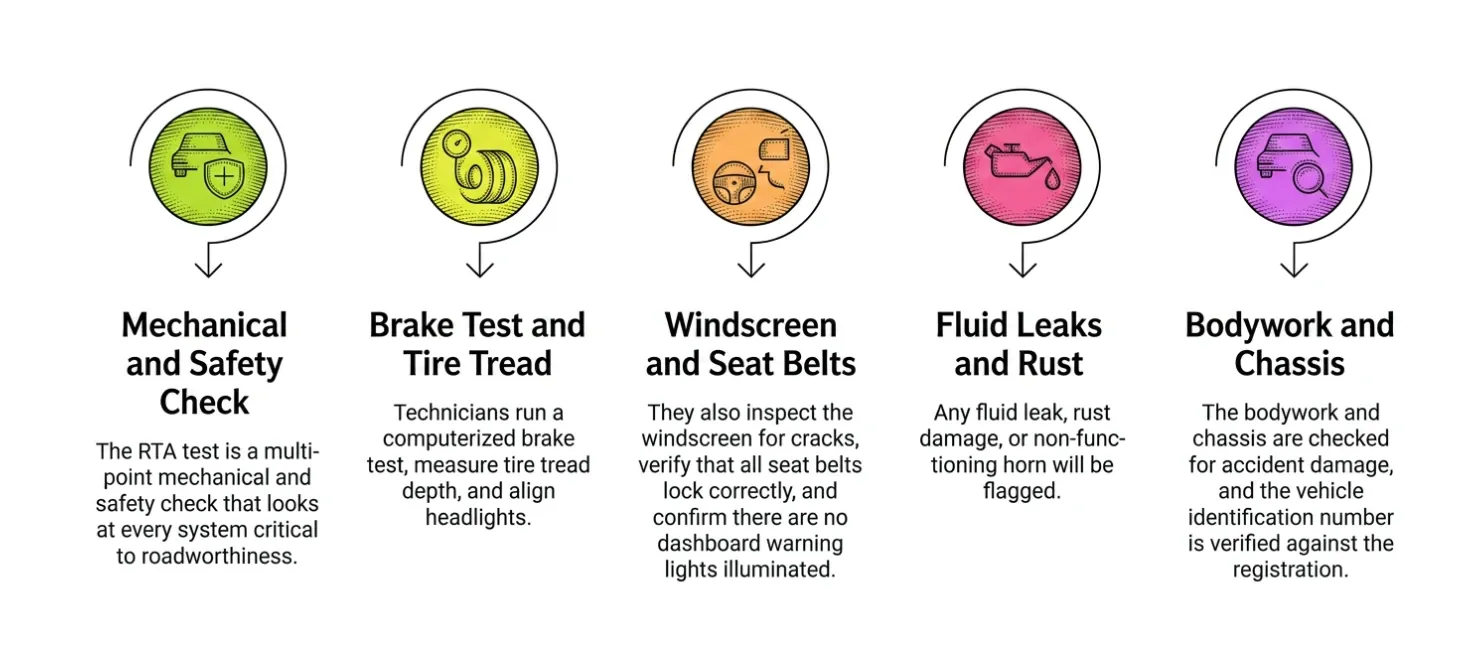
Inspectors examine brake efficiency, brake balance, brake pedal response, and hydraulic components. Weak braking performance is one of the most common reasons vehicles fail — and it is worth fixing before the test rather than after, since a retest means a second trip. If the brakes need attention, get them serviced at a workshop before booking your test slot.
2. Steering System
Checked for excessive play, alignment issues, component wear, and safe operation.
3. Suspension System
Inspectors evaluate shock absorbers and suspension leaks. Worn suspension components can negatively affect handling and road safety.
4. Tires and Wheels
Inspectors check tread depth, tire condition, uneven wear, tire age, and wheel damage. Old or damaged tires are among the leading causes of test failure.
5. Lights and Indicators
All lighting systems must operate correctly, including brake lights, reverse lights, turn signals, and hazard lights. Even a single faulty bulb can result in a failed test.
6. Windshield, Glass and Mirrors
Inspectors examine windshield cracks, visibility issues, mirror condition, and wiper operation.
7. Seat Belts
Seat belts must retract correctly, lock properly, and show no signs of damage.
8. Exhaust Emissions
The vehicle’s emissions are tested to ensure compliance with environmental standards.
9. Vehicle Identification
Inspectors verify the chassis number (VIN), registration details, and vehicle identification information against official records.
Top 10 Reasons Vehicles Fail RTA Testing
- Worn-Out Tires — bald, cracked, or excessively worn tires frequently result in failure.
- Faulty Lights — broken headlights, brake lights, or indicators.
- Brake Problems — brake imbalance or poor braking performance.
- Suspension Defects — damaged or leaking suspension components.
- Cracked Windshield — any crack affecting visibility.
- Fluid Leaks — oil, coolant, and hydraulic leaks.
- Steering Issues — loose or worn steering components.
- Excessive Emissions — often indicating engine or exhaust system problems.
- Damaged Seat Belts — can result in immediate failure.
- Dashboard Warning Lights — engine, ABS, or safety system warnings should be investigated before testing.
How Long Does RTA Testing Take?
- Vehicle testing: 15-30 minutes
- Waiting time: 15-60 minutes
- Total process: 30-90 minutes
Visiting during non-peak hours can often reduce waiting times.
RTA Vehicle Testing Fees in Dubai
Costs may include the vehicle testing fee, registration renewal fee, innovation and knowledge fees, and a retest fee if required. For the latest fees, always refer to the official RTA website.
Popular Vehicle Testing Centres in Dubai
Dubai has several authorized vehicle testing centres including Tasjeel, Shamil, Wasel, and Al Mutakamela. Before visiting, check operating hours and service availability directly with the testing centre.
How to Improve Your Chances of Passing RTA Testing the First Time
Before visiting a testing centre, check that all headlights, brake lights, reverse lights, and indicators are functioning correctly. Inspect your tires for adequate tread depth, uneven wear, and visible damage. Verify your windshield is free from cracks and wipers operate properly. Look underneath the vehicle for oil, coolant, or hydraulic fluid leaks, and address any dashboard warning lights before testing.
Many vehicle owners choose to save time by using a professional vehicle collection and testing service, where the vehicle is collected, tested, and returned after completion.
Need Help with RTA Vehicle Inspection?
Comfort Drive offers RTA vehicle inspection services across Dubai. Our team can collect your vehicle, complete the RTA testing process, assist with registration renewal, coordinate workshop visits if needed, and return the vehicle to your location.
Conclusion
Passing RTA vehicle testing doesn’t have to be stressful. By understanding what inspectors check and addressing potential issues beforehand, you can significantly improve your chances of passing on the first attempt.